
Anne-Cathrine Storgaard Danielsen and Sebastian Gutierrez from Aarhus University discuss how soil biology can be integrated into national and international soil maps and models to give us early warning systems to detect soil degradation.
Visible insights from hidden diversity: Mapping soil microbial communities
When we talk about soil health, we often focus on the physical and chemical aspects such as pH, carbon content, or texture – properties we can measure relatively easily. But beneath our feet lives an entire world that we rarely include: billions of microorganisms that quietly drive the functioning of soils. These microbes regulate nutrient cycling, influence plant growth, play a key role in storing carbon, etc.. Yet, despite their importance, they are still largely missing from large-scale soil monitoring.
The challenge: Measuring the invisible
So how do we begin to include something we can’t see, and can’t easily measure everywhere?
Collecting microbial data requires specialised sampling, expensive DNA sequencing, and complex data analysis. This makes it difficult to include microbial indicators in national monitoring programmes, where thousands of locations may need to be assessed regularly.
As a result, soil biodiversity is often overlooked, even though it is central to how soils function.
A new approach: From samples to maps
One promising solution is to rethink how we use microbial data.
Instead of trying to measure microbial diversity everywhere, we can measure it in selected locations, understand how it relates to soil, climate, and land use, and then use models to predict microbial diversity across larger areas.
This allows us to map microbial communities—for example, by creating maps of microbial alpha diversity, a measure of how diverse microbial communities are within a single soil sample.
In other words, we move from isolated data points to a broader, spatial understanding of how microbial life is distributed across landscapes.
From concept to reality: Large-scale microbial datasets
This shift is already underway. In recent years, several large-scale initiatives have begun to generate exactly the kind of data needed to explore microbial diversity across regions.
Across Europe, the LUCAS soil survey has opened the door to analysing microbial communities at continental scale. By combining soil samples with detailed environmental metadata, it becomes possible to uncover broad patterns in microbial diversity across climates, land uses, and soil types. However, while these datasets offer impressive geographic coverage, sampling locations are often relatively sparse, limiting the resolution at which microbial patterns can be observed.
At the national level, projects such as Microflora Danica in Denmark have taken a different approach, sampling extensively across the country at a much finer spatial resolution. Using DNA-based methods, these efforts provide a detailed view of microbial communities across a wide range of habitats.
In other words, large-scale microbial datasets already exist and can be used for mapping. However, to move towards operational soil monitoring, we need to develop harmonised approaches, scalable models, and systems that can integrate microbial data into routine monitoring frameworks.
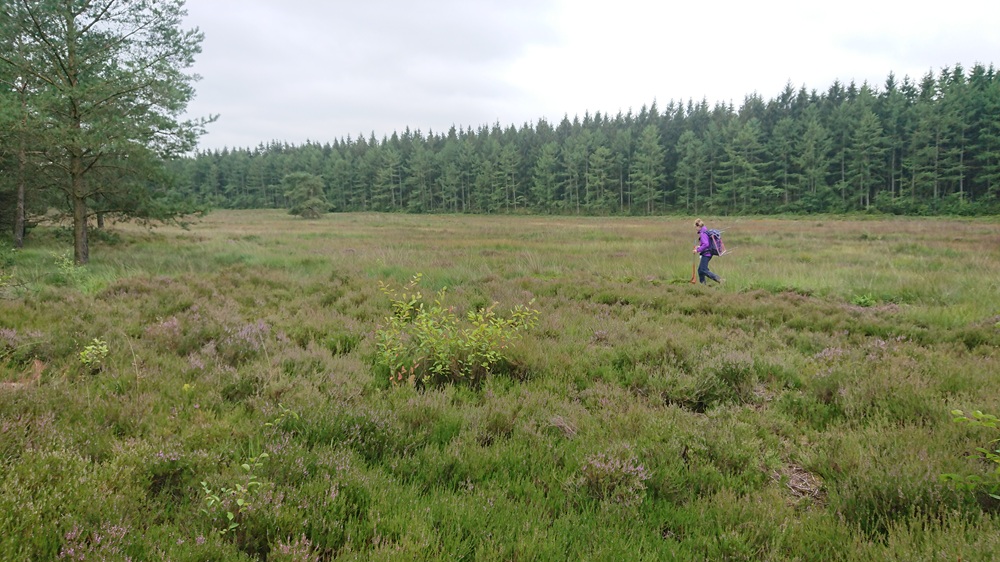
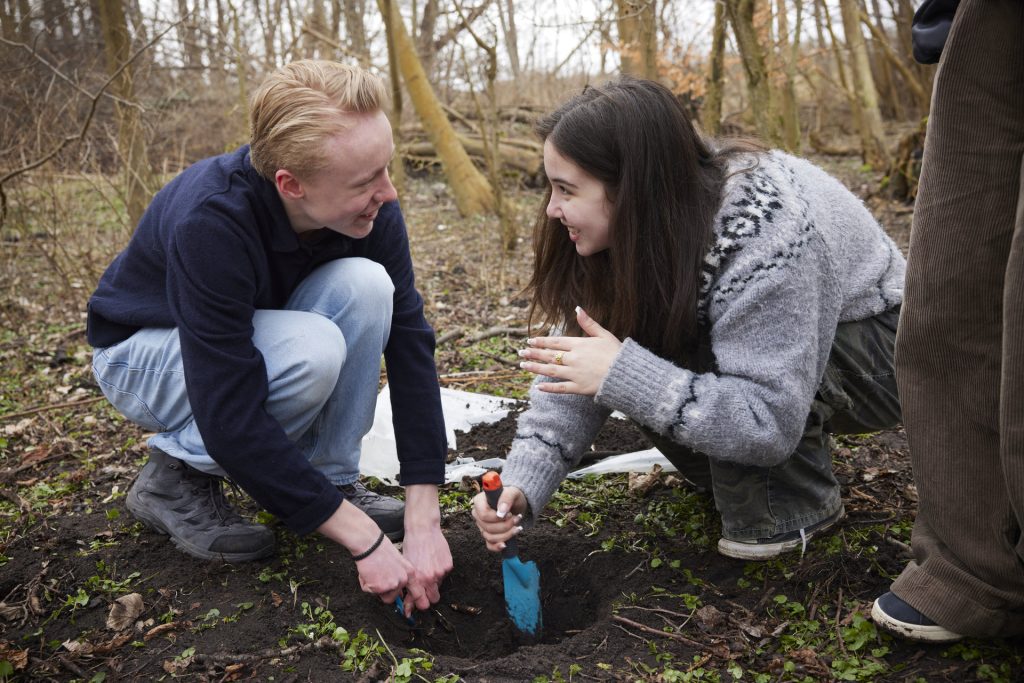
A wet heathland where Anne-Cathrine went to collect samples for the Microflora Danica (MFD)
Why map the microbes – and where does AI come in?
Mapping microbial diversity opens new possibilities for understanding and managing soils.
It strengthens the biological dimension of soil health, complementing physical and chemical indicators that are already widely used. It also allows us to identify patterns that would otherwise remain hidden. By mapping alpha diversity, we can observe how it changes across the landscape and identify the most important drivers such as land-use or environmental conditions, as microbial diversity is not randomly distributed.
Large-scale studies have shown clear links between diversity and key soil properties such as pH, carbon content, and moisture conditions. Mapping allows us to scale up from individual samples. These insights can be applied far beyond the locations where measurements were originally taken. By capturing these relationships, we can begin to understand not just where microbes are, but why they are there.
Microbial communities are shaped by many interacting factors—soil properties, climate, vegetation, and management. These relationships are often complex and non-linear, making them difficult to capture with traditional approaches.
This is exactly where artificial intelligence becomes especially valuable.
AI-based models can integrate large and diverse datasets, learn complex relationships, and generate predictions across space. Within projects like AI4SoilHealth, this kind of modelling is key to turning scattered measurements into meaningful, large-scale soil health information.
Benefits: Making soil biology usable
This approach brings several important advantages.
It makes microbial indicators scalable, allowing them to be applied across regions rather than just at sampled sites. It is also more cost-effective, as fewer samples are needed to generate meaningful insights.
At the same time, it enables integration—microbial diversity can be combined with physical and chemical indicators to provide a more complete picture of soil health.
Perhaps most importantly, it supports better decision-making, helping to identify areas of concern, target monitoring efforts, and guide sustainable land management.
Challenges: what we still need to solve
Despite its potential, mapping microbial diversity is not without challenges.
One key issue is interpretation. Higher microbial diversity is not always better, as it depends on the ecosystem and environmental context.
There are also technical challenges, including differences in sampling and sequencing methods, variation in data quality, and a lack of standardised workflows. These factors can make it difficult to compare results across studies.
Finally, there is uncertainty in the models themselves. Predictions are only as reliable as the data they are based on, and AI models can sometimes be difficult to interpret and communicate.
Addressing these challenges will be essential if microbial indicators are to be used in policy and monitoring.
From research to monitoring
So how can this approach be used in practice?
A realistic pathway for national soil monitoring programmes is to combine targeted sampling with predictive modelling. Microbial data can be collected at selected reference sites, linked to existing environmental datasets, and used to predict diversity across wider areas.
By updating these models over time, it becomes possible to track changes in microbial diversity and detect early signs of soil degradation or recovery.
This kind of hybrid approach makes it feasible to include biological indicators without dramatically increasing monitoring costs.
How this fits into AI4SoilHealth
AI4SoilHealth aims to make soil health measurable, scalable, and actionable across Europe.
A central part of this effort is the development of harmonised datasets, robust indicators, and AI-driven tools that can translate complex data into practical information.
Mapping microbial alpha diversity fits naturally into this vision. It provides a biological indicator of soil health, complements existing measurements, and contributes to a more integrated understanding of soils.
By building on existing datasets and combining them with advanced modelling approaches, AI4SoilHealth is helping to move microbial monitoring from research into practice.
Looking ahead
We are only beginning to explore how microbial data can be used at scale.
In the future, we may see stronger links between microbial diversity and soil functions, improved models that integrate biology, chemistry, and physics, and more accessible tools for farmers, land managers, and policymakers.
Understanding the life beneath our feet is essential if we want to protect and restore the soils we depend on.
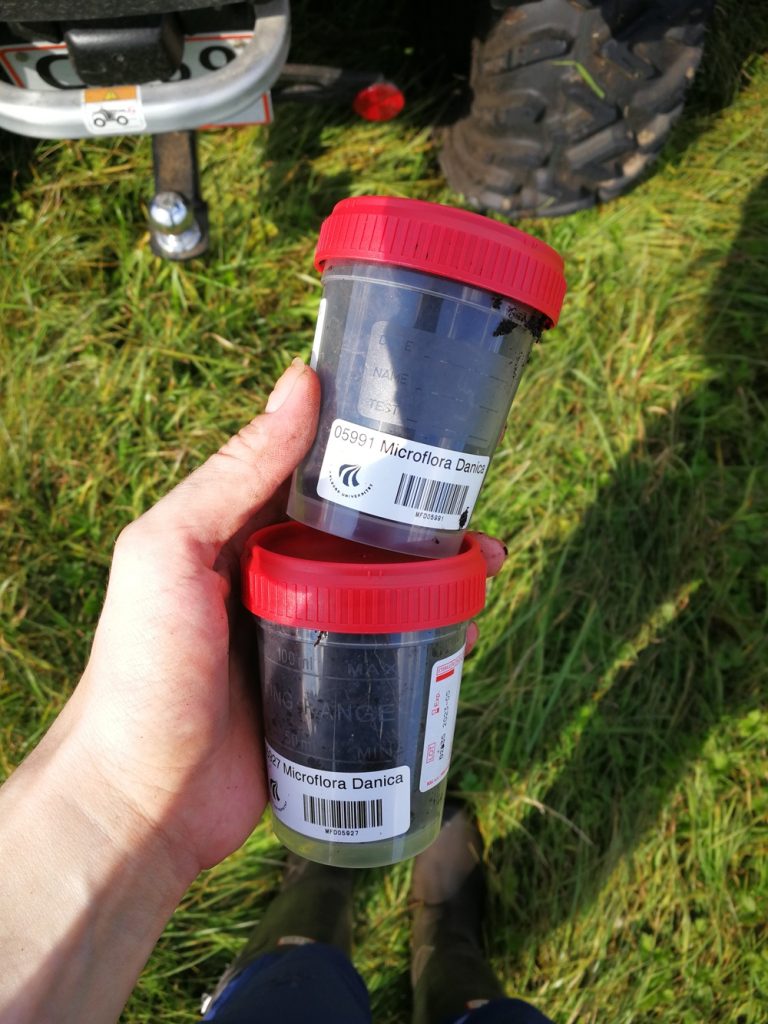
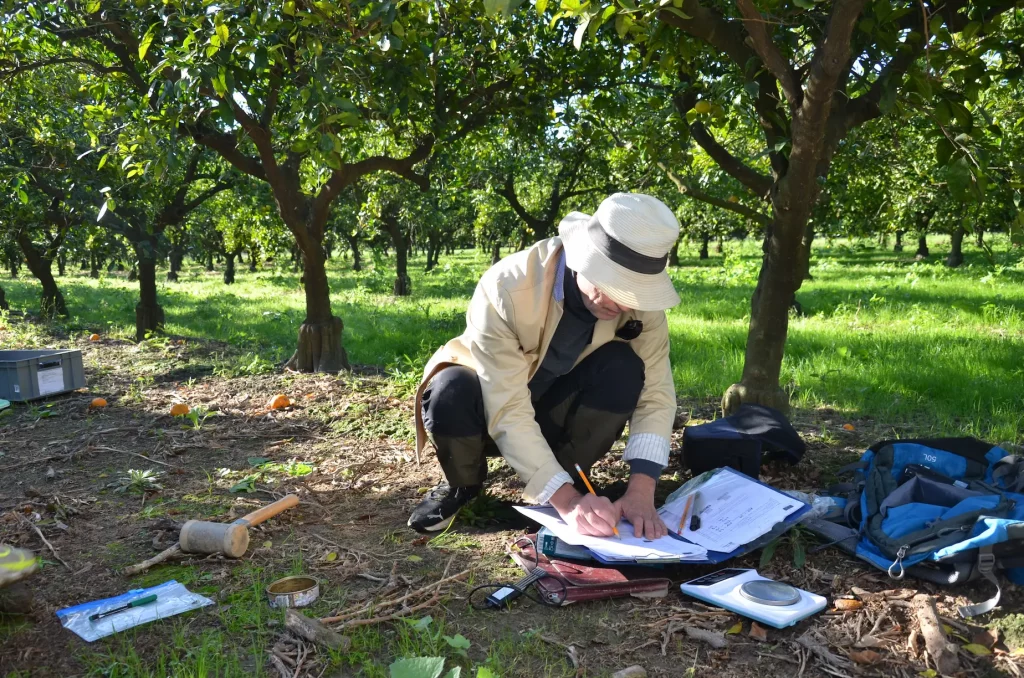
Two samples collected in the field for sequencing as part of Microflora Danica